


 English
 日本語
日本語 русский
 Español
 Deutsch
Content
- 1 Why a Factory Audit Means More Than a Lab Test
- 2 Key Areas to Cover in a Cut Resistant Gloves Factory Audit
- 3 Cut Resistance Standards: What the Audit Should Confirm
- 4 Quality Control Points Across the Production Flow
- 5 Coating and Finish Quality: The Second Half of the Story
- 6 Red Flags in a Cut Resistant Gloves Factory Audit
- 7 When the Audit Reveals Advanced Manufacturing Capability
- 8 Frequently Asked Questions
When a batch of cut resistant gloves fails on a customer's production line, the cost is rarely limited to rejected inventory. Lost production time, safety compliance gaps, and the burden of re-sourcing add up quickly. From our work as a protective glove manufacturer operating our own factory in Rugao, Jiangsu, the root cause of most delivery failures is not a flawed glove design, but a missing link between a certified sample and a volume shipment. A disciplined cut resistant gloves factory audit and a working quality control system exist to close that gap. The conclusion is straightforward: audit the factory for consistency, not for one impressive sample.
Why a Factory Audit Means More Than a Lab Test
Standards such as ANSI/ISEA 105 and EN 388 describe what a glove can do under laboratory conditions. They do not guarantee that the next thousand pairs will behave the same way. A factory audit answers a different question: can this manufacturer repeat the certified performance at volume?
A structured audit reviews documented procedures, machine calibration records, and defined inspection points. It also reveals how the factory reacts when something goes off-spec. A facility that weighs gloves during knitting, for example, catches yarn tension drift before it affects finished products. A facility that only tests at the end discovers problems after material and labor have already been spent.
In a well-managed factory, quality issues are caught early. The chart below shows a typical distribution of where defects that ultimately affect the finished glove are first detected across the production flow.
Share of cut resistant glove defects first detected at each inspection stage (illustrative pattern).
Key Areas to Cover in a Cut Resistant Gloves Factory Audit
An effective audit traces the value chain from fiber to packed carton. Buyers should structure the visit around four core areas: incoming material, knitting, dipping or coating, and final inspection. Each area has its own acceptance criteria and its own failure modes.
| Audit area | Verification points | Production impact |
|---|---|---|
| Incoming material | Fiber type and denier, coating compound batch records, supplier certificates | Yarn substitution changes cut performance even when the label stays the same |
| Knitting process | Machine gauge, stitch density, glove weight sampling intervals | Minor tension drift affects seamless glove integrity and the final cut score |
| Dipping or coating | Slurry viscosity, dwell time, oven temperature profile, cure duration | Coating thickness and adhesion drive grip, abrasion, and measured cut performance |
| Final inspection | Cut resistance sampling, dimensional checks, visual and labeling inspection | Confirms batch behavior before packaging and shipment |
The audit report should record what was observed at each gate, not just whether the factory has a quality manual. The practical test is simple: can the operator at each station describe the acceptance criteria without reading a wall poster?
Cut Resistance Standards: What the Audit Should Confirm
Cut resistance is not a single number. North American buyers rely on ANSI/ISEA 105, which ranks performance from A1 to A9. European buyers use EN 388, which reports a numeric scale from level 1 to 5. The two systems use different test principles, so a glove that performs well under one standard may behave differently under the other. The audit should confirm which standard the factory is certified against and whether the test report covers the current production line.
| Aspect | ANSI/ISEA 105 (2016) | EN 388 (2016) |
|---|---|---|
| Cut level scale | A1 to A9 | Level 1 to 5 |
| Test principle | Tomodynamometer, measures grams of cutting force | Coup test, measures cut index against a rotating blade |
| Common industrial specification | A4 to A6 for metal and glass handling | Level 3 to 5 for comparable exposure |
| Report coverage | Palm and sometimes full glove | Multiple samples from different glove areas |
When a specification calls for A5 cut resistance, the factory should be able to show test reports from the same production line being audited, not just a sample sent to a laboratory months earlier. A good example of this level is the 13-gauge A5 gray high-performance cut resistant glove, a core item in our own range. Before locking a specification, buyers should also understand the difference between cut resistant and cut proof terminology, a topic covered in our industry guide.
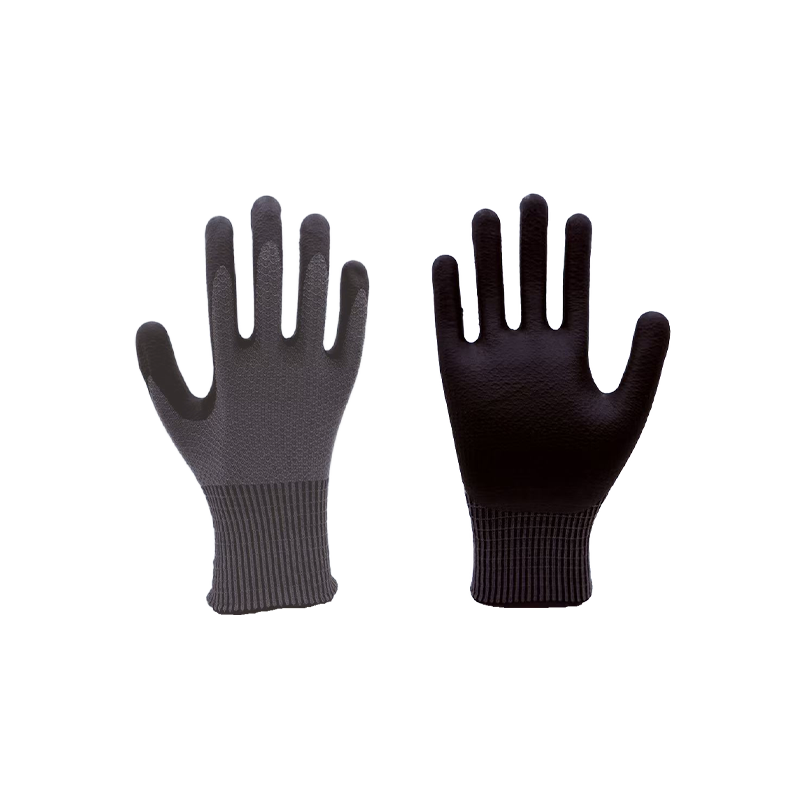 13-Gauge A5 Gray High-Performance Cut-Resistant GlovesThis lychee-pattern knitted glove with nitrile foam coating offers EN388 Level E cut protection, balancing flexibility, grip, and wear resistance for precision and logistics tasks.View Product →
Quality Control Points Across the Production Flow
Quality control in a cut resistant glove factory should be a sequence of gates, not a single final test. The following checkpoints are the minimum for a reliable supply chain:
- Incoming material inspection: verify fiber type, denier, and coating compound against the purchase specification.
- Knitting process sampling: measure glove weight and stitch density at fixed intervals to detect machine drift.
- Coating application checks: monitor slurry viscosity, dipping time, and curing temperature.
- Cut resistance testing: run production samples against the relevant standard on a scheduled basis.
- Dimensional and seam verification: check length, cuff style, and any seamed constructions.
- Final visual inspection and packaging: sort out defective gloves and confirm label accuracy.
Each gate must have a defined sampling plan. A factory that tests one pair per batch is not performing quality control; it is performing a gesture. The chart below shows the typical distribution of defects observed during final inspection across coated cut resistant glove production.
- Coating voids 30%
- Dimension deviation 25%
- Stitch or knit flaws 20%
- Surface contamination 15%
- Other 10%
Coating and Finish Quality: The Second Half of the Story
The palm coating often differentiates a glove that is merely cut resistant from one that is practical to wear through a full shift. Coating chemistry, viscosity, dwell time, and cure profile all influence grip, abrasion resistance, and the final measured cut performance. The audit should verify that these parameters are documented for each product and followed on the production record.
For applications that combine blade exposure with rough surfaces or oily parts, the coating strategy changes the economics of the glove. Our cut resistant fully immersed abrasive glove is a relevant example: the base HPPE yarn provides the cut rating, while the abrasive coating carries the wear life. If the coating application is not controlled, the buyer inherits a glove that fails early in service.
 Cut-Resistant Fully Immersed Abrasive GlovesA 15-gauge fully dipped frosted glove combining HPPE, glass fiber, and polyester for A4 cut and Level 4 abrasion resistance, suited to oily or rough-surface handling.View Product →
Red Flags in a Cut Resistant Gloves Factory Audit
- Labels that list a certification standard without a matching test report for the actual production line.
- No batch traceability: the factory cannot link a finished batch to its incoming material records.
- Inspection stations without defined pass or fail criteria.
- Coating parameters that are adjusted by operator experience rather than documented process settings.
- Cut testing equipment that has never been calibrated or lacks calibration records.
- Different answers about sampling frequency from sales, production, and quality staff.
A single red flag does not necessarily disqualify a factory, but two or more should be treated as a clear warning signal.
When the Audit Reveals Advanced Manufacturing Capability
Buyers who need protection above A5 often look for composite yarns, impact protection, or multi-layer palm reinforcement. These constructions add complexity to knitting, molding, and inspection. The audit should examine how the factory handles that complexity, because the same discipline applies to simpler products.
A6 cut resistant gloves with TPR shock absorption, for instance, require a molding step and a visual check for pad alignment after assembly. If a factory demonstrates controlled production at this level of complexity, its basic cut resistant glove line is likely to follow the same quality discipline.
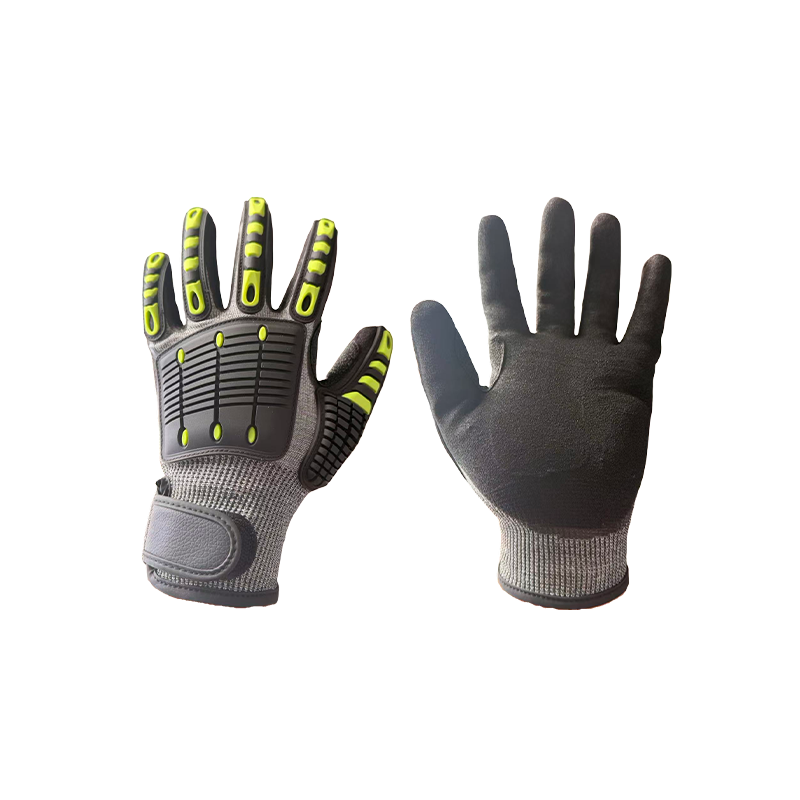 A6 Cut-Resistant TPR Shock-Absorbing GlovesFeaturing an 18-gauge liner with tungsten fiber for A6 cut resistance, TPR impact strips, and palm padding, this glove suits high-risk metalworking and rescue operations.View Product →
An audit is not a one-time event. After a successful audit, the buyer and the factory should agree on sampling frequency, documentation standards, and communication channels. That ongoing quality control loop is what turns a good factory into a dependable supplier.
We follow this principle across our own production lines in Jiangsu and welcome buyers who want to verify the process themselves. If you have questions about our testing procedures or would like to discuss an audit plan, our team is reachable through the contact page.
Frequently Asked Questions
What is the difference between a factory audit and a quality inspection?
An audit evaluates the factory's overall system: procedures, documentation, traceability, and process control. An inspection verifies that a specific batch meets the agreed specifications. Both are needed for reliable cut resistant glove sourcing.
How often should a cut resistant gloves factory be audited?
At a minimum, once a year for an established supplier, and before the first large order for a new supplier. A major line change, an acquisition, or a high non-conformance rate should trigger an additional audit.
Does a factory audit guarantee that every glove is cut resistant?
No audit can guarantee every single unit. A well-run audit reduces risk by verifying that the production process is capable, the equipment is calibrated, and the sampling plan is aggressive enough to catch drift before shipment.
Which cut resistance level should I specify for metal handling?
For light sheet metal and general assembly, A4 to A5 is a common range. For heavy stamping, glass handling, and sharp exposed edges, A6 and above is more appropriate. The audit should verify that the factory's test method matches your target level.