


 English
 日本語
 русский
 Español
 Deutsch

Content
- 1 Medium Duty vs Light Duty Mechanical Gloves: The Short Answer
- 2 What Actually Separates Light Duty from Medium Duty
- 3 Light Duty vs Medium Duty: Side-by-Side
- 4 Where Light Duty Wins, and Where It Fails
- 5 Where Medium Duty Earns Its Higher Price
- 6 Duty Class Is Not Cut Class
- 7 A Ten-Day Trial That Settles the Question
- 8 FAQ
- 9 Getting the Specification Right the First Time
Medium Duty vs Light Duty Mechanical Gloves: The Short Answer
If the job involves small parts, fine assembly, or anything under roughly two kilograms where operators need to feel what they are holding, choose light duty. If hands are dragging across rough cardboard, castings or oily metal, and loads run from 10 to 25 kilograms, move up to medium duty. Getting this wrong shows up quickly on the floor: blistered palms and gloves that wear through in a few hours when the shell is too thin, dropped parts and forearm fatigue when it is too stiff.
Both types belong to the same family of general-purpose mechanical protection, which is judged on abrasion, cut, tear and puncture performance. The real difference is not one headline number but a package of choices covering yarn thickness, coating weight, palm construction and cuff design, all of which shift the balance between dexterity and durability.
What Actually Separates Light Duty from Medium Duty
Four construction decisions do most of the work. Once you know them, reading a specification sheet takes about thirty seconds.
Gauge and liner weight
Gauge is the number of knitting needles per inch. A 15-gauge liner uses finer yarn than a 13-gauge one, so the same fiber feels thinner and more responsive on the fingers. A 15-gauge nylon-spandex shell with a light nitrile foam palm is the classic light-duty build. Liners at 13 gauge and heavier, especially with a thicker palm, generally land in medium duty. Above that, 10-gauge and 7-gauge shells with heavy coatings belong to the heavy-duty tier, where impact and rigidity matter more than feel.
Coating and palm build
Coating choice drives grip and wear more than the liner does. PU gives the sharpest dry tactility and works well for small parts, but it offers limited grip on oily surfaces and thinner films wear quickly against abrasives. Nitrile micro-foam balances breathability with a secure dry grip, while nitrile frosted or sandy finishes add oil grip at the cost of some feel. Latex delivers strong wet and cold grip but adds weight and raises latex sensitivity considerations for some wearers. Thicker dips, double dips and dipped knuckles all push a style toward medium duty. If you are comparing coating families, this dipping glove selection guide breaks down the trade-offs between nitrile, latex and PU.
Reinforcement and cuff
Medium duty styles usually reinforce the thumb crotch, add a partial dip at the knuckles, or extend the knit wrist for better coverage when the hand digs into a carton. These small additions are the first place abrasion failures appear, so their presence is a reliable signal of the intended workload.
Standards behind the labels
Mechanical performance is measured under ANSI/ISEA 105 in North America and EN 388 in Europe. Abrasion runs from 0 to 6 under ANSI and 1 to 4 under EN 388. A glove marketed as light duty commonly lands at ANSI abrasion 2 to 3, while medium duty styles typically sit at 4 to 5. Those are typical ranges, not rules, so confirm the value on the test report rather than the product name.
Light Duty vs Medium Duty: Side-by-Side
| Feature | Light duty | Medium duty |
|---|---|---|
| Common gauge | 15 to 18 gauge | 13 gauge or heavier |
| Liner material | Nylon-spandex, fine polyester | Polyester, cotton blend, acrylic |
| Coating | Thin PU or nitrile micro-foam | Thicker nitrile, nitrile frosted, latex |
| Palm construction | Single light dip | Single or double dip, reinforced thumb crotch |
| ANSI abrasion level | Commonly 2 to 3 | Commonly 4 to 5 |
| Cut level | Usually A1 to A2, higher with engineered yarn | Typically A2 to A4 unless specified otherwise |
| Grip on oily parts | Limited | Good with nitrile or latex |
| Breathability | High | Moderate |
| Typical service life | Half a shift to one shift | One to three shifts |
| Relative cost per pair | Lower | Higher |
| Typical tasks | Assembly, inspection, small-part picking, packing | Carton handling, rough castings, pallet work, oily parts |
Where Light Duty Wins, and Where It Fails
Picture an assembly cell running 200 small components an hour, with operators threading screws and seating connectors. A thin PU or nitrile foam palm lets them pick a 6 mm washer off a bench without pinching, and the reduced gripping force is what keeps hands fresh through a full shift. A 15-gauge nylon-spandex shell dipped in nitrile foam is the reference point here.
 15-Gauge Nylon-Spandex Gloves with Nitrile Foam CoatingA reference point for light assembly and small-part handling, pairing a 15-gauge nylon-spandex shell with nitrile foam palm coating for dexterity and grip.View Product →
The failure mode is predictable. Put that same glove on someone unloading abrasive corrugated cartons for eight hours and the palm film is gone before lunch, usually starting at the base of the index finger. Once the coating breaks through, the knit absorbs oil and the glove starts slipping, which is a safety issue rather than a cost issue. Light duty also struggles with sweat: at 15 gauge the airflow is good, but a tight cuff traps heat, and wet hands inside a loose glove generate more friction injuries than most buyers expect.
One caution about assumptions. Light duty describes weight and dexterity, not cut performance. Fine-gauge engineered yarns can reach ANSI A4 or A5 in a glove that still feels like a second skin, so never infer cut level from how thin a glove feels.
Where Medium Duty Earns Its Higher Price
Now move to a loading dock handling 15 kg cartons with stapled edges, or a machining cell where parts come off degreased and slippery. This is medium duty territory. A 13-gauge shell with a thicker nitrile or latex palm gives the abrasion headroom to survive a full shift, and the coated palm holds an oily surface without the operator clamping down hard.
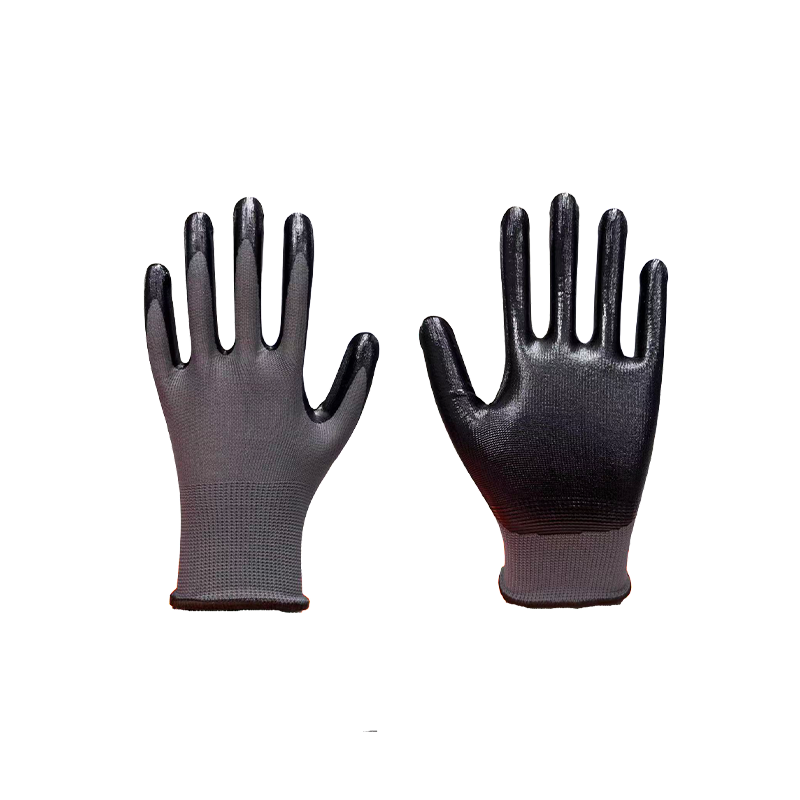 Medium Mechanical Protection Gloves for Balanced DexterityExplore this category for moderate mechanical protection, including a 13-gauge nitrile smooth style suited to assembly and maintenance where feel and grip matter.View Product →
The cost is feel. Thicker coatings reduce tactile feedback, which matters when operators also handle small fasteners or need to check surface finish by touch. Heavier shells also run warmer, so in a non-climate-controlled plant you may need to rotate styles by season rather than standardize on one. Fit becomes critical at this weight: a medium duty glove that is half a size too large will bunch at the palm, create pressure points at the thumb crotch, and wear out faster than a properly fitted light duty glove.
Duty Class Is Not Cut Class
Buyers often treat light, medium and heavy as if they were safety ratings. They are not. Duty class is industry shorthand for a weight and durability tier, while cut resistance is a separate measured value under ANSI/ISEA 105, running from A1 to A9, or under EN 388 using the TDM test with letters A to F. A light duty glove can be A5, and a bulky medium duty glove can be A1.
Where cut and impact risks overlap, the practical answer is usually a mid-weight glove with added protection rather than a heavier plain shell. An A6 cut-resistant style with molded TPR on the back of the hand handles sheet metal edges and knocks against fixtures at the same time, which is common in stamping and assembly of pre-formed panels.
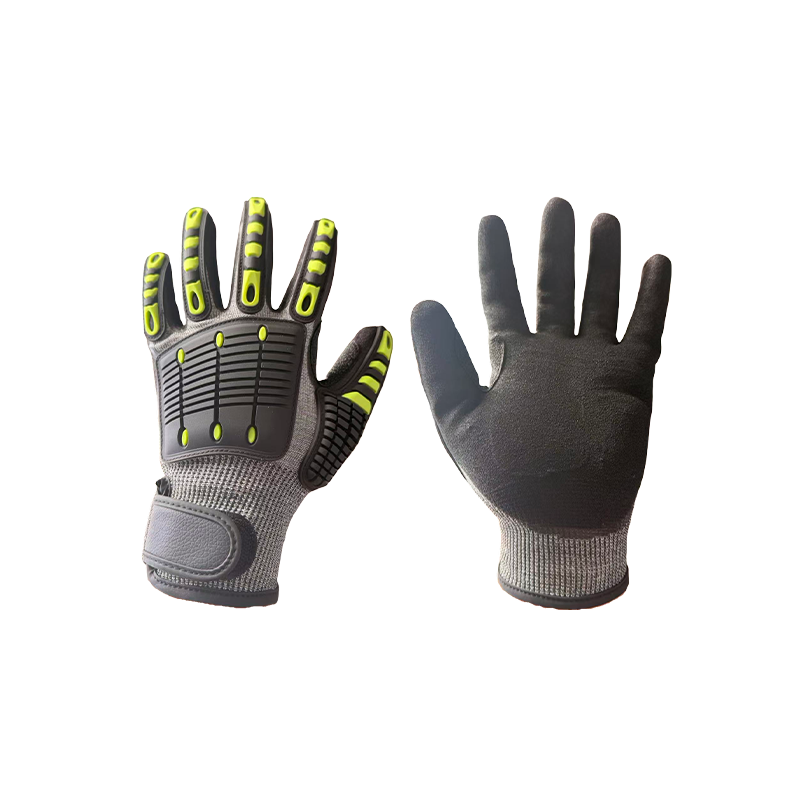 A6 Cut-Resistant Gloves with TPR Shock AbsorptionFor overlapping cut and impact risks, this ANSI A6 cut-resistant glove includes molded TPR on the back of the hand for shock-absorbing protection.View Product →
If the hazard extends past the wrist, arm protection is worth considering alongside the glove, since a sleeve or arm guard is easier to replace than a torn forearm and keeps the glove specification lighter.
A Ten-Day Trial That Settles the Question
Specification sheets narrow the field, but the decision comes from a controlled comparison on your own line. A short trial with two candidate styles usually produces a clear winner.
- Pick two styles only, one light and one medium, matched to the same task and the same operators.
- Run each for five working shifts, rotating operators so individual technique does not skew the result.
- Record pairs consumed per operator per shift, not per department, so consumption is traceable.
- Log drops, scratches, rework and any hand complaints such as soreness at the thumb crotch or excessive sweating.
- Ask operators which glove they would keep, and weigh that answer against the consumption data before deciding.
If the medium duty option uses 60 percent fewer pairs but operators report numb fingertips and a measurable rise in handling errors, the light style is still the right call for that station, and the medium duty glove belongs at the next station instead.
FAQ
Is medium duty the same as heavy duty?
No. Heavy duty gloves use thicker shells, heavier coatings and often rigid impact protection, and they sacrifice most tactile feel. Medium duty is the middle tier: enough abrasion and tear resistance for sustained material handling while still allowing reasonable dexterity.
Can one glove cover both light and medium tasks?
Sometimes. A well-built medium duty glove with a thin palm dip can handle light assembly and moderate handling, but it will feel clumsy for very small parts and may still wear prematurely on abrasive cartons. Splitting the two stations usually costs less than compromising both.
Does a higher gauge mean better cut protection?
No. Gauge describes yarn fineness and dexterity, not cut performance. Cut level comes from the fiber blend and is measured separately, which is why an 18-gauge glove can outperform a 10-gauge one on cut resistance.
How often should mechanical gloves be replaced?
Replace when the coating breaks through, the knit is exposed, the palm feels slick, or the cuff no longer holds. On light duty work that is often once per shift; on medium duty handling, one to three shifts is typical depending on abrasion severity.
Getting the Specification Right the First Time
The practical rule is simple: match the glove to the abrasion and load the hand actually meets, then raise cut or impact protection separately if the hazard assessment calls for it. Light duty buys feel and speed; medium duty buys wear life and grip on rough or oily parts. Most plants need both, assigned station by station rather than one style across the whole floor.
If you want to test candidate styles against your own workload, we can supply samples of light and medium duty builds with the corresponding test data so the trial starts from facts. Reach out through our contact page and describe the task, load weight and surface condition, and we will point you to the closest match in the range.