


 English
 日本語
日本語 русский
 Español
 Deutsch
Content
- 1 Start with the hazard, not the glove
- 2 Use ANSI cut levels as your comparison baseline
- 3 The coating determines grip, wear life, and chemical protection
- 4 Combined hazards need combined protection
- 5 What to check in a supplier before you order
- 6 Putting the selection process together
- 7 Frequently asked questions about safety work gloves
Every shift, workers in metal fabrication, chemical plants, cold storage, and assembly lines put their hands in harm's way. A freshly sheared steel edge, a solvent-soaked part, a frozen carton, a vibrating tool - each hazard demands a specific type of protection. The safety work gloves issued at the start of the shift are the only line of defense between a routine task and a reportable injury.
The most common mistake in industrial glove procurement is choosing by thickness, price, or a vague claim printed on the package, without mapping the gloves to the hazards that actually exist on the line. This guide lays out a systematic selection process: identify the hazards, compare ANSI cut levels and coating properties, then evaluate the manufacturer behind the product.
Start with the hazard, not the glove
The rule is simple: you cannot choose the correct safety work glove until you know what a worker cuts, grabs, spills, or strikes during a shift. In our supplier assessments, we begin with a hazard inventory at each workstation rather than opening a product catalogue.
The most common hand injury risks in industrial work fall into six categories:
- Cuts and lacerations from sharp metal, glass, ceramic edges, or cutting tools
- Abrasion from rough surfaces, concrete, sanding belts, and grinding media
- Chemical contact with solvents, acids, alkaline cleaners, or process oils
- Temperature extremes, from cold storage and outdoor winter work to hot parts and flame exposure
- Impact and compression from falling parts, presses, or vibrating tools
- Grip failure on oily, wet, or slippery surfaces, which leads to drops and secondary injuries
While exact numbers vary across industries, a typical distribution of reportable hand injuries looks like this:
- Cuts and lacerations 35%
- Crush and impact 20%
- Abrasions 15%
- Chemical contact 12%
- Punctures 10%
- Thermal burns 8%
Once the hazards are on paper, translate each one into a required glove property. The table below is the starting point we use in glove specifications.
| Hazard present | Required glove characteristic |
|---|---|
| Cut and laceration risk | ANSI/ISEA 105 cut rating of A3 or higher for most tasks |
| Abrasion and rough surfaces | Coated palm with nitrile or latex for abrasion resistance |
| Chemical exposure | Chemical-resistant coating or a Type A chemical glove |
| Cold working conditions | Thermal lining or insulated knit construction |
| Heat or flame contact | Heat-resistant or flame-retardant materials |
| Impact from tools and parts | TPR or gel padding on knuckles and fingers |
| Oil, grease, or water | Nitrile foam or latex-dipped palm for wet grip |
If a task combines two or more hazards - and most industrial tasks do - select a glove that satisfies the highest-risk requirement first, then weigh the secondary needs. This order prevents the classic mistake of buying a heavy chemical glove for a job dominated by cut risk, or an overly high cut level for a task where abrasion is the greater threat.
Use ANSI cut levels as your comparison baseline
For cut hazards, the ANSI/ISEA 105 standard is the most objective way to compare safety work gloves across brands and materials. The standard measures the cutting load, in grams, required to cut through the glove material under controlled test conditions. The chart below shows the nine levels and their minimum requirements.
Minimum cutting load per ANSI/ISEA 105 cut level, based on the current standard.
For most metal handling, glass work, and light-to-medium fabrication tasks, A4 to A6 is the practical working range. A2 and A3 gloves suit low-risk assembly and packaging, while A7 and above are reserved for extreme hazards such as scrap metal recycling or heavy-gauge sheet metal, where extra bulk and reduced dexterity are an acceptable trade-off.
A well-balanced choice in the middle range is the 13-gauge A5 gray high-performance cut-resistant glove, which combines a tight knit construction with enough flexibility for repetitive handling work. It is widely used in metal stamping, glass handling, and automotive assembly, where cut risk is real but dexterity cannot be sacrificed.
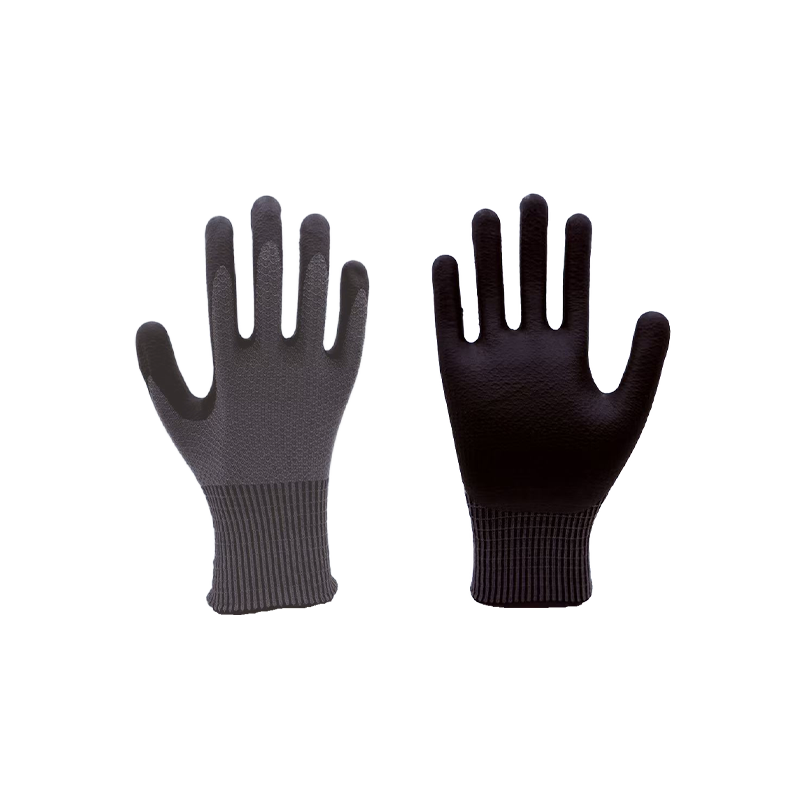 Wholesale 13-gauge A5 Gray High-Performance Cut-Resistant Gloves Manufacturer, OAs a 13-gauge A5 Gray High-Performance Cut-Resistant Gloves manufacturer and company, Jiangsu Shunhao Safety Protection wholesale 13-gaug...View Product →
If you are deciding between cut-resistant and cut-proof products, our guide on choosing cut-resistant versus cut-proof gloves explains the test differences and where each type is genuinely appropriate.
The coating determines grip, wear life, and chemical protection
The liner of a knitted glove determines cut resistance and comfort, but the coating decides how the glove performs in the hand: grip, oil resistance, abrasion resistance, and service life. Procurement teams that select a liner by its cut rating alone often end up with gloves that wear through in weeks or slip on oily parts.
Three coating materials dominate the market.
Nitrile
Nitrile is the strongest all-round coating for oily and greasy environments. It offers dependable abrasion resistance and solid wet grip, making it a default choice for machining, press operations, and maintenance work.
Latex
Latex provides excellent grip on both wet and dry surfaces and stretches well with hand movements. It suits wet handling and general construction work, but it breaks down quickly in contact with oils and solvents.
Polyurethane (PU)
PU is the thinnest and most flexible coating, preserving tactile sensitivity. It fits precision assembly, electronics work, and dry handling, but it wears faster under abrasive conditions than nitrile or latex.
| Property | Nitrile | Latex | Polyurethane (PU) |
|---|---|---|---|
| Oil resistance | Excellent | Poor | Fair |
| Wet surface grip | Good | Excellent | Fair |
| Dry surface grip | Good | Good | Excellent |
| Abrasion resistance | Excellent | Good | Fair |
| Dexterity and feel | Moderate | Moderate | Excellent |
| Best suited for | Oily and greasy handling | Wet general handling | Precision assembly |
The right way to choose a coating is to match it to the surface conditions of the task. A short field trial - ten workers wearing a candidate model for one shift - often reveals grip and wear characteristics that a specification sheet cannot.
Combined hazards need combined protection
Many real-world positions do not present a single risk. A worker transferring steel parts faces cuts, abrasion, and oil in the same task. A maintenance technician in a chemical area can meet solvent splash and sharp pipe edges in a single repair job. In these settings, a single-purpose glove forces the worker to choose which type of injury to risk.
For tasks that combine cut and impact hazards, such as dropping heavy parts, operating hammer drills, or handling stamped metal, the glove needs shock absorption as well as cut resistance. The A6 cut-resistant TPR shock-absorbing glove is designed for exactly this dual requirement: it carries an A6 cut rating and adds thermoplastic rubber padding across the back of the hand and knuckles. Typical applications include heavy die handling, metal recycling, and rebar work on construction sites.
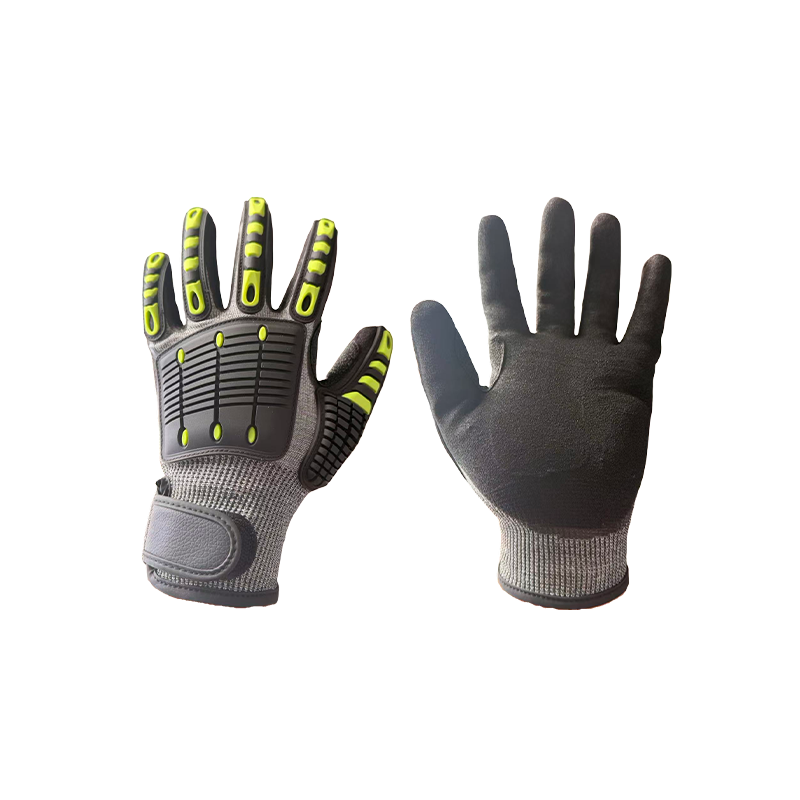 Wholesale A6 Cut-resistant TPR Shock-absorbing Gloves Manufacturer, OEM/ODM CompAs a A6 Cut-resistant TPR Shock-absorbing Gloves manufacturer and company, Jiangsu Shunhao Safety Protection wholesale A6 Cut-resistant T...View Product →
When chemicals and sharp objects appear in the same work environment, a standard chemical glove can fail quickly if a blade nicks the membrane. Type A chemical protection gloves resist chemical permeation while also offering mechanical protection, making them suitable for refinery maintenance, parts cleaning lines, and laboratory work with sharp containers.
What to check in a supplier before you order
For B2B buyers, the product specification is only the first half of a glove decision. The supplier's consistency, quality control, and manufacturing depth determine whether the gloves approved in a sample lot are the same gloves that arrive in the next shipment. Three criteria matter most.
- Quality control process. Glove failures usually begin with variations in yarn tension, dip thickness, or seam construction. A manufacturer that performs in-house inspection on every batch, rather than relying only on random finished-goods checks, reduces the risk of field failures significantly.
- Test data traceability. Ask for the test report that corresponds to the exact SKU you plan to order, not a similar model. Verify that the standard referenced, such as ANSI/ISEA 105 or EN 388, matches the market your end users operate in.
- Customization capability. Distributors and branded manufacturers often need specific cuff lengths, colors, coatings, or packaging. A factory that combines R&D, production, and quality inspection in one location can implement custom specifications faster and more reliably than a trading company reselling standard stock.
As a manufacturer with our own production facility in Rugao, Jiangsu, and a dedicated quality-control laboratory, we see first-hand how much consistency varies between factories. That is precisely why we treat batch-level quality inspection and traceable test documentation as part of the product, not an afterthought.
Putting the selection process together
Selecting safety work gloves comes down to matching three things: the hazards of the task, the standard-based performance of the product, and the reliability of the manufacturer. Start with a written hazard inventory, use ANSI cut levels and coating types to narrow the field, then verify quality control and test documentation before committing to a large order.
If you need help mapping your workstations to a specific specification, contact our team and we will give you a practical recommendation based on your actual working conditions.
Frequently asked questions about safety work gloves
These are the questions procurement and safety teams ask us most often.
What does the ANSI cut level on a glove mean?
The level indicates the minimum cutting load, in grams, that the glove material resisted in a standardized test. A5 means 2,200 grams and A6 means 3,000 grams. The rating is a comparison tool, not a promise of cut-proof performance.
Can one glove protect against both cuts and chemicals?
Yes, but only when the product is specifically designed for both, such as a cut-resistant chemical protection glove. Standard chemical gloves offer little cut resistance, and most cut-resistant liners are not chemical barriers.
How often should safety work gloves be replaced?
Inspect gloves before every shift and replace them when the coating is worn through, the knit has holes, or the fit is no longer snug. For chemical and heat-resistant gloves, follow the manufacturer's inspection guidance and your workplace exposure plan.
Is a higher ANSI cut level always better?
Not necessarily. Higher levels usually mean thicker or heavier material, which reduces dexterity and grip sensitivity. Workers often remove uncomfortable gloves to do detailed tasks, which is more dangerous than using the correct lower-rated glove. Match the level to the actual risk.