


 English
 日本語
 русский
 Español
 Deutsch
Content
A maintenance technician at a plant that runs both a −18 °C freezer aisle and a 180 °C pasteurising line walks the same floor on the same shift. His glove has to survive a box cutter, a hot pipe and a cold steel rail, and it has to do all three without turning his fingers into clumsy stubs. That is the real brief behind multi-function safety gloves, and it is far more demanding than any single-hazard glove on the market.
The short answer: specify by the dominant hazard first, then verify that the secondary protections still hold once the materials are combined. A glove listed as A4 cut with level 2 contact heat is not "A4 plus level 2". The loft that keeps hands warm also traps heat, and the palm coating that gives wet grip is often the first layer to soften near a hot surface. Three separate test rigs produce three separate scores; on the shop floor, the wearer meets all three hazards at once.
- Dominant hazard sets the shell and cut level.
- Secondary hazards set the coating, liner and cuff.
- The combination, not the individual score, decides whether the glove actually works.
What "Multi-Function" Really Means on a Spec Sheet
Protection claims come from different standards, and each one answers a different question. Reading them side by side is the fastest way to spot a glove that only looks versatile.
| Hazard | Reference standard | Scale | What the number does not tell you |
|---|---|---|---|
| Cut | ANSI/ISEA 105 (A1–A9); EN 388 (A–F) | Higher grade = more force resisted | Performance after laundering, abrasion or wetting |
| Contact heat | EN 407; ASTM F1060 | Higher level = hotter surface tolerated for a short, fixed time | Radiant heat, molten splash, or a long grip on the same hot part |
| Cold | EN 511 (convective 0–4, contact 0–4, water 0–1) | Higher = more insulation, better dry-hand performance | Dexterity loss and moisture build-up inside the glove |
| Abrasion and puncture | EN 388 (1–4); ANSI/ISEA 105 (0–6) | Higher = more cycles before breakthrough | How quickly the coating wears at the fingertips in real handling |
A cut score is normally generated on new gloves unless the supplier explicitly claims durability after washing. Heat and cold ratings describe a bench test, not an eight-hour shift. Treat the numbers as filters for shortlisting, not as proof of field performance.
Why Combining Cut, Heat and Cold Is an Engineering Trade-Off
Each protection family pulls the design in a different direction, and the glove designer has to give something up.
- Cut resistance comes from high-performance polyethylene, aramid, glass fibre or steel core yarns. Adding more of them raises the cut score and also raises stiffness.
- Heat resistance favours aramid and leather, which char rather than melt. Leather palms block contact heat well but hold moisture and add weight.
- Cold protection depends on trapped air — acrylic, fleece or velvet liners. Insulation adds thickness, and thickness costs dexterity and grip feel.
- Coatings (nitrile, latex, PU) solve wet and oily grip, but a foam nitrile palm is not a heat barrier and can degrade against a hot surface.
The practical consequence is that a genuine three-way glove usually lands in the middle of each scale rather than at the top. If your risk assessment demands A6 cut and level 3 contact heat simultaneously, expect a heavier glove, a shorter continuous wear time and a higher unit price. It is often cheaper and safer to split the task: a thin A4 cut glove for the sharp-edge work, a dedicated heat glove for the hot side.
Matching the Blend to the Job
Most real multi-function requests fall into three combinations. Each one has a different failure mode.
Cold plus cut: freezer picking, winter utilities, cold-chain handling
The liner has to insulate without pushing the hand away from the knife handle. Look for a seamless knit with a brushed or velvet interior, a nitrile palm for wet grip at low temperature, and a cuff long enough to cover the wrist gap under a sleeve. Moisture is the real enemy: a glove that keeps hands warm when dry becomes a liability when the liner soaks through and stops trapping air.
 Cut-Resistant Winter Gloves, ANSI Cut A3Cold-weather cut protection for tasks where liner insulation and wrist coverage matter; available for wholesale inquiry in ANSI Cut A3.View Product →
Heat plus cut: metal trimming, glass handling, hot-part assembly
Here the shell matters more than the coating. Aramid and leather blends resist contact heat and resist cutting, and they char instead of melting onto the skin. Check the contact-heat level against the actual part temperature and dwell time, and remember that a short test exposure is not the same as carrying a hot component across the plant.
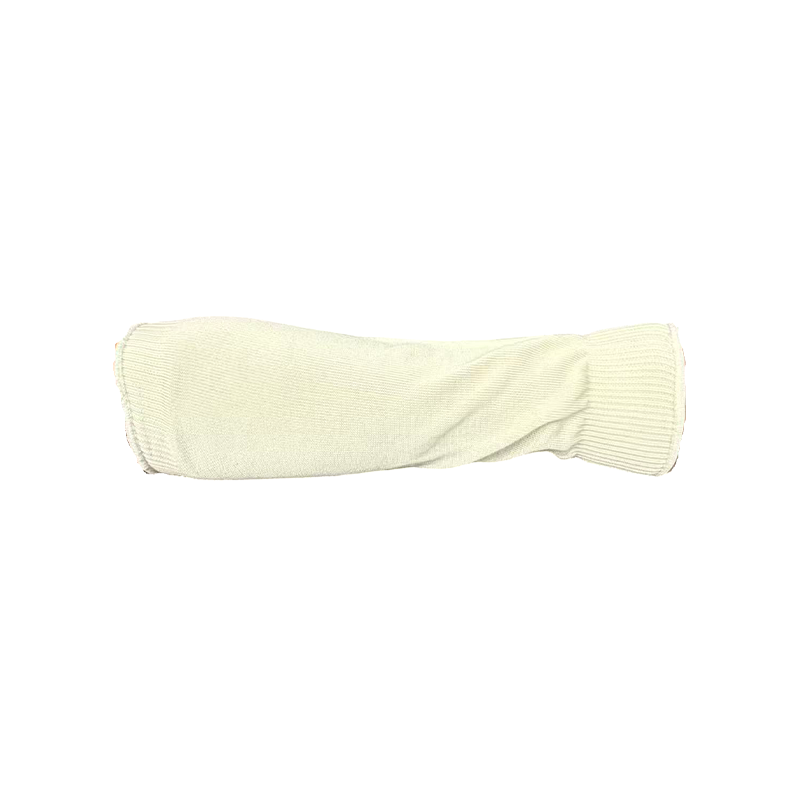 Flame-Retardant and Cut-Resistant Heat Protection GlovesHeat-protection glove range item combining flame-retardant and cut-resistant claims for buyers comparing shell materials; inquiry available.View Product →
Cut plus impact: rig work, tool handling, heavy maintenance
Back-of-hand thermoplastic rubber guards absorb knocks without changing the palm, so the cut liner and grip coating can stay thin. The trade-off is heat: TPR softens at high temperature, so this combination belongs on mechanical tasks, not next to a furnace.
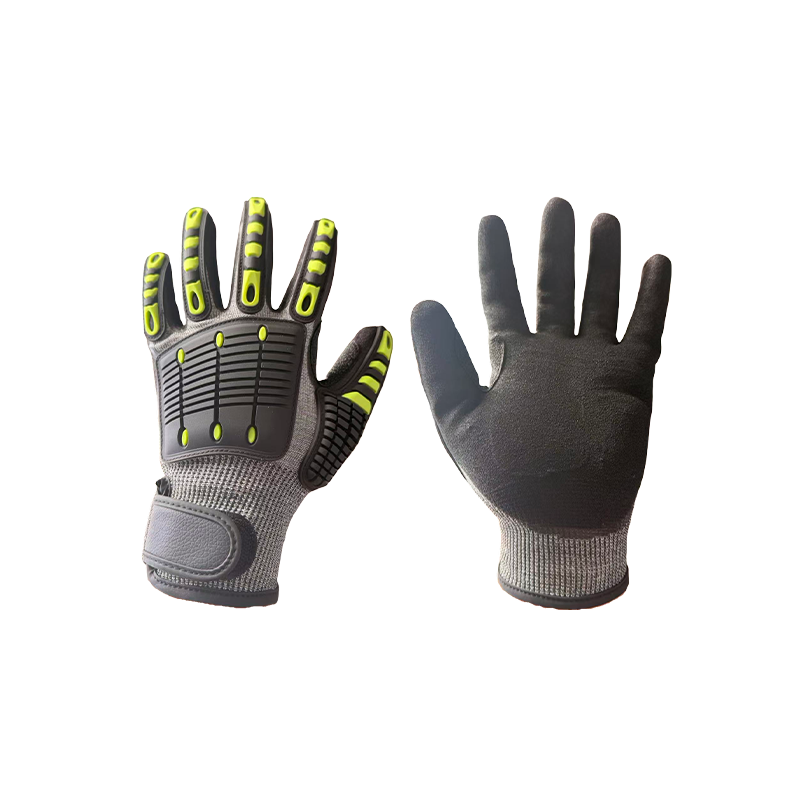 A6 Cut-Resistant TPR Shock-Absorbing GlovesCut protection with back-of-hand TPR guards for mechanical tasks where impact absorption is useful; listed in ANSI Cut A6.View Product →
A Six-Point Selection Checklist
- Map the hazard timeline. List what the hand touches in a shift and for how long, not just the worst case. A 3-second contact and a 3-minute contact need different specifications.
- Set the cut level from the task. Sharp sheet edges, glass and blade work typically justify A4 or above; general handling with occasional edges often sits at A2–A3. Our guide on choosing cut-resistant gloves walks through that reasoning in more detail.
- Confirm the heat type. Contact, convective, radiant and molten splash are separate tests. Buying a contact-heat glove for radiant heat from an oven mouth is a common and expensive mistake.
- Confirm the cold rating and the wet condition. A dry-cold glove and a wet-cold glove are different products. If condensation or washdown water is present, water penetration matters more than insulation loft.
- Check fit and dexterity. Measure palm circumference and middle-finger length, then size to the larger hand. Too much length at the fingertip causes bunching and turns a good cut liner into a snag risk.
- Plan the replacement cycle. Compare cost per pair against cost per shift worked. A cheaper glove that fails at the twentieth wash can cost more than a durable one, once downtime and hand injuries are counted.
Five Buying Mistakes Worth Avoiding
- Over-specifying the cut level. Buying A6 for light assembly increases stiffness and fatigue without improving safety.
- Assuming the coating protects against heat. Nitrile and PU palms are grip solutions, not thermal barriers.
- Using dry-cold gloves in wet cold. Once the liner is soaked, insulation performance collapses.
- Ignoring cuff and length. A 35 cm fully coated style and a short knit cuff serve very different splash and reach requirements.
- Skipping the trial. A two-week wear test on one line usually reveals fit and durability problems that no datasheet shows.
Frequently Asked Questions
Can one glove really be rated for cut, heat and cold at the same time?
Yes, but usually at moderate levels on each scale. Genuine tri-purpose gloves exist; a glove that claims top scores in all three categories is worth checking against its actual test reports.
Does a higher cut level always mean better protection?
No. Cut grades are measured on new material, and they say nothing about grip, fit or heat. A glove that slips or bunches creates a new risk that no cut score captures.
How often should multi-function gloves be replaced?
Replace when the palm coating is cut through, when the liner no longer springs back, or when the glove no longer passes a visual inspection. For heat-exposed gloves, any charring, stiffening or discolouration is a retirement signal.
Are coated gloves suitable for hot work?
Only if the coating is specifically rated for it. Standard foam nitrile and PU palms are intended for grip in wet or oily conditions and should not be relied on as thermal protection.
Dongfeng Gloves has been manufacturing hand protection in Rugao, Jiangsu since 2010, and has operated as an integrated developer, producer and quality inspector since 2013, with a 10,000 m² site, a 4,500 m² workshop and an in-house laboratory. The range covers ANSI cut levels A2 through A8, dipped styles in nitrile, latex and PU, plus dedicated heat, cold, chemical and mechanical families, so a combined cut–heat–cold specification can usually be built from existing constructions rather than from scratch. Multi-language support covers English, Japanese, Russian, Spanish and German, and the team can review a hazard list and propose a trial set — send the details through the contact page and ask for a sample evaluation before committing to a full order.